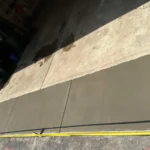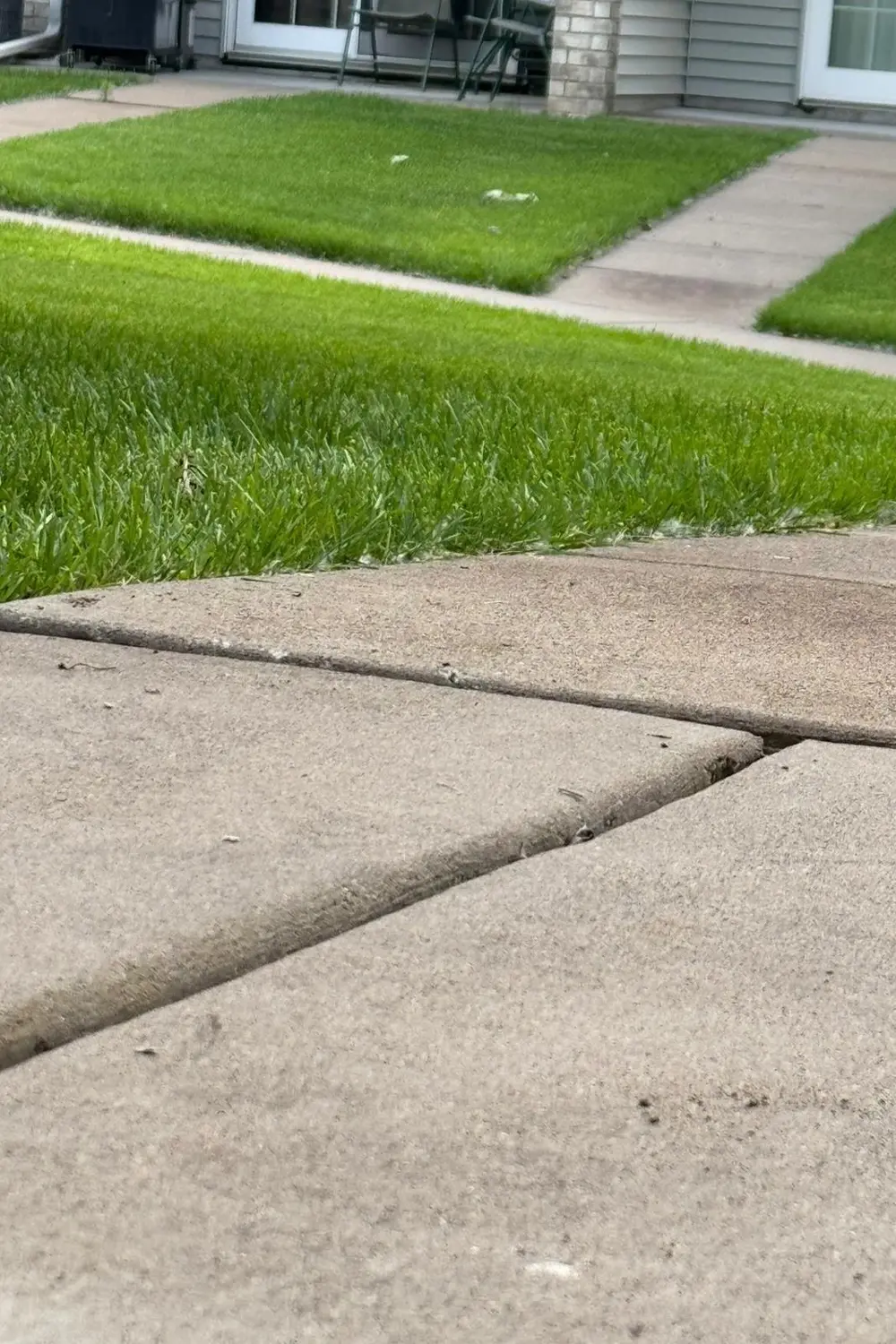

Concrete Settling is the visible result of changes that begin in the soil under a slab. When support is not uniform the panel loses elevation or tilts and everyday signs start to appear. Small lips at joints catch shoes and stroller wheels. Water sits near steps and along foundations after rain. A garage apron feels like a small ramp when a vehicle enters. These clues point to an uneven base and they rarely improve on their own.

How Soil Behavior Drives Movement
Soils carry the load of the slab. Fine grains shift position as moisture moves in and out of the ground. When water leaves saturated soil the grains pack more tightly and total volume drops. When water arrives through roof discharge irrigation or natural runoff it can wash fines out of the support zone and leave a hidden hollow. With time the slab above follows that loss of support. This slow and steady shift is the core of Concrete Settling.
Water Paths That Create Erosion and Voids
Surface Routes That Undercut Edges
Roof discharge that lands near walks and drives creates a narrow path where water concentrates. Every storm removes a small amount of material from that path. The edge begins to hang over a hollow and the panel drops when weight crosses the weak zone. The fix starts with redirecting that water before any lift is planned.
Subsurface Flow That You Cannot See
Water also moves through trenches left by utilities and along seams where soil texture changes. This subsurface flow carries fines away from the bearing layer. The slab does not fail right away. It begins to rock underfoot and later shows a distinct offset that invites trips. Tracing these hidden routes is part of any serious plan to correct Concrete Settling.
Climate Factors That Accelerate Movement
Freeze and Thaw Cycles in Northern Regions
In cold seasons water expands when it turns to ice. That push lifts soils and changes the fit between particles. When thaw arrives the soil relaxes and drains. Fines can travel with the melt water and leave less support under the panel. Repeated seasons amplify the effect. The result is a slab that no longer shares load evenly.
Heat Wind and Low Humidity in Summer
Warm dry days increase evaporation at the surface of the slab and at shallow soil layers. Rapid drying can open small gaps near edges and joints. If irrigation or storms follow a dry spell new water uses those gaps as paths to the base. The cycle of wet and dry creates conditions that favor Concrete Settling.
Diagnostics That Separate Guesswork From Knowledge
Measure Slope and Offsets With Simple Tools
A straightedge a string line or a compact laser level reveals where panels have moved and by how much. Record measurements at joints and along door thresholds. Compare readings after a heavy rain and again after a dry week. Pattern and change over time tell you more than a single glance.
Listen for Hollow Areas and Probe for Voids
A light tap with a rubber mallet produces a hollow sound where support is missing. Where the tone changes a gap is likely. In larger spaces a professional can confirm with ground imaging or infrared checks. Knowing where support is absent is essential before any lift is attempted.
Map Water From Roof to Ground
Walk the property during a steady rain. Follow each downspout and see where the water goes. Look for bare soil near slab edges and for low areas that trap runoff. Mark these zones on a simple sketch. This map becomes the guide for redirecting water so the result of a lift endures.
Proven Ways to Stop and Reverse Concrete Settling
Re establish Support With Targeted Foam Injection
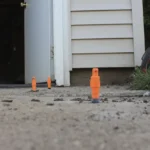
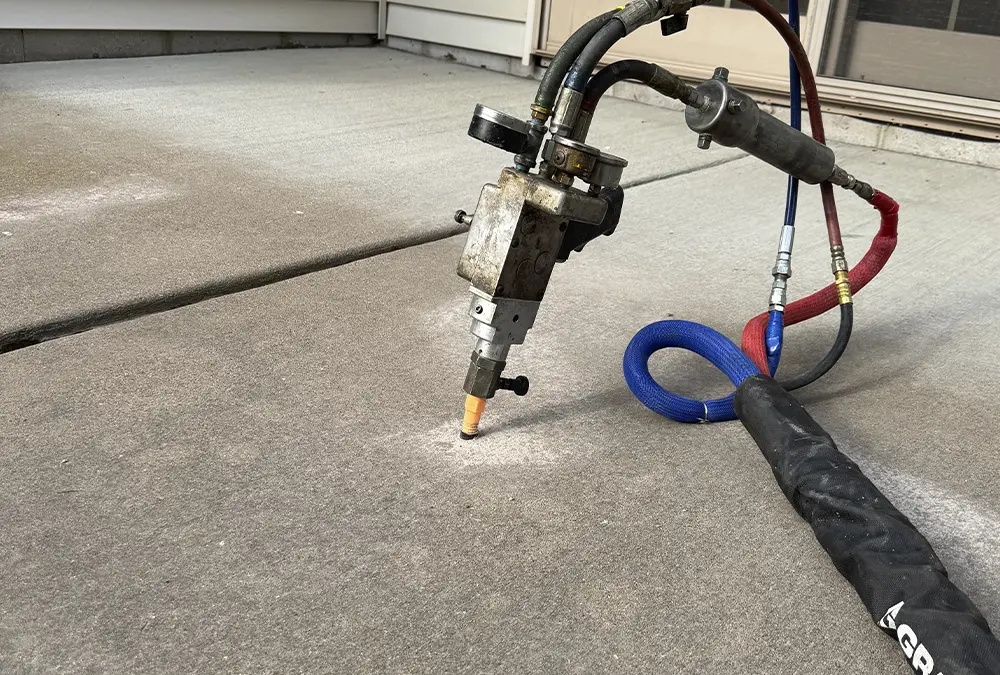
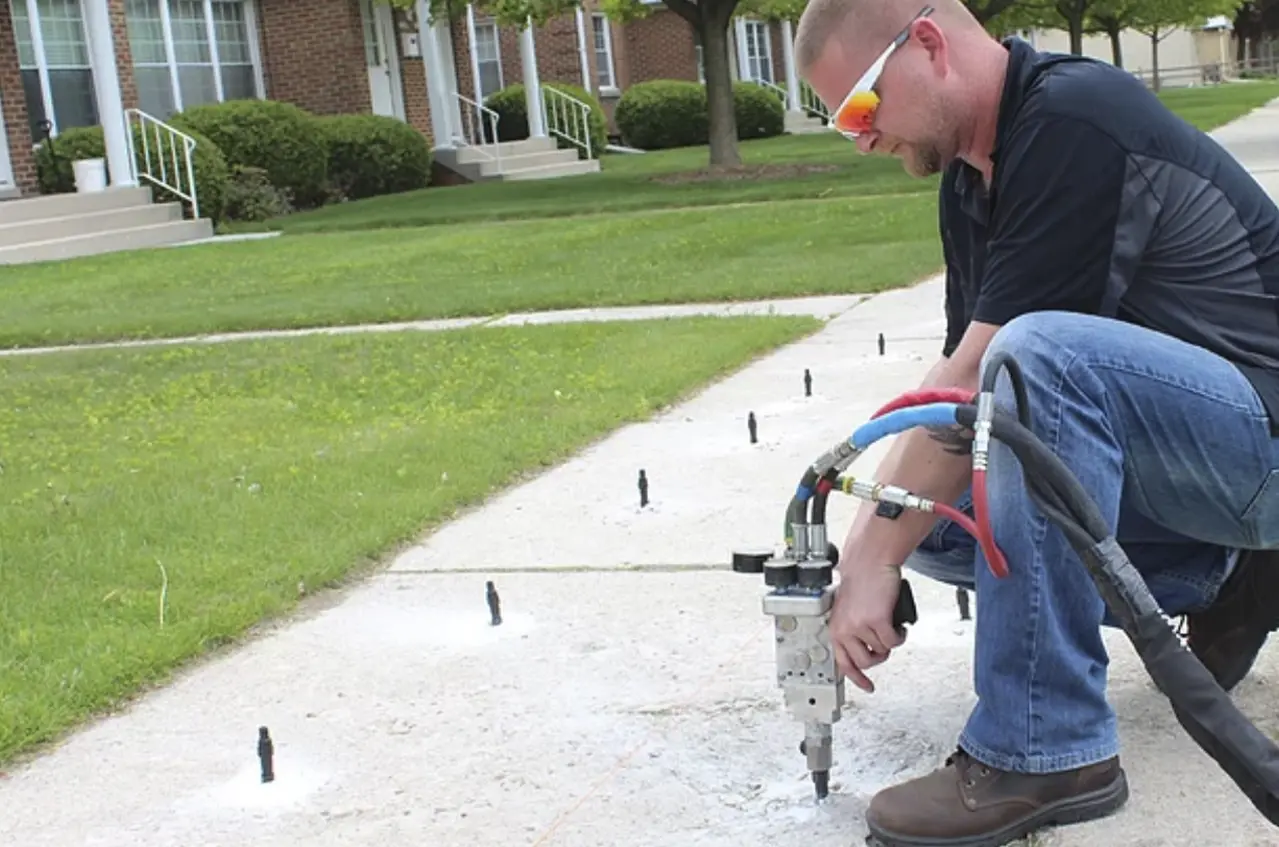
Closed cell polyurethane can be injected through small ports to fill voids and restore bearing. The material expands in a controlled way displaces trapped water and cures quickly so normal use can resume the same day. Because the foam adds very little weight it does not overload weak soil. This approach returns the slab to the intended plane with minimal disruption.
Seal Joints and Redirect Water on the Same Day
A successful lift is only half the job. Control joints and visible cracks should be sealed before the crew leaves so surface water cannot dive into the base. Downspouts need extensions and grade should guide runoff away from the slab. These simple moves protect the repair and slow future erosion.
Improve Edges and Subbase Where Loads Concentrate
Garage aprons steps and corners under columns accept higher loads. Where these locations show repeat movement consider a narrow band of compacted base material or a hard edge restraint. The goal is to share load across the full width of the panel so that one small zone is not asked to carry more than its share.
Where You Will See the Biggest Gains
Driveways and Garage Entries
Restored slope moves water away from the house and removes the jolt that drivers feel at the bay. Tires no longer drop into a dip and edges stop crumbling from repeated impact.
Walkways and Entry Paths
Offsets turn into smooth transitions that feel safe for children guests and mobility devices. Visual lines look straight again and the space reads as well kept.
Patios Pool Decks and Outdoor Living Areas
Water drains as intended and furniture sits level. A small lift can turn a slick low spot into a comfortable surface that looks and functions like new.
Interior Slabs Over Fill
Laundry rooms basements and utility spaces often sit on soil that was placed during construction. If that fill was not compacted in layers it can settle with time. A precise lift realigns doors protects finishes and avoids the mess of full replacement.
A Clear Step by Step Plan That Works
Assessment and Planning
Begin with measurements a void check and a water map. Define targets for elevation and identify the causes that led to the loss of support. Set a plan that treats water and structure together.
Execution With Controlled Injection
Drill small ports at mapped locations. Inject the foam in pulses and watch elevations with a laser. Pause between injections so the reaction completes and the slab settles into a uniform plane. Keep thresholds and transitions aligned so movement feels natural underfoot.
Finish Seal and Verify Drainage
Patch each port flush and texture the surface where needed. Seal joints and cracks. Run water from a hose at safe volume to confirm that drainage now moves away from the structure. Document before and after elevations for the record.
Everyday Habits That Prevent New Movement
Keep a modest positive slope away from foundations. Add extensions to every downspout. Reseal control joints on a regular schedule. Avoid locating very heavy items at the same spot near a slab edge. Walk the site after the first major storm each season and after the first hard freeze to confirm that everything still looks right.
When to Request Professional Help
Call for service when a walkway lip reaches the height of a common pencil when a panel rocks under foot when water sits near steps or the house after rain or when a vehicle dips at the entry to the garage. These are clear signals that the base no longer carries the load evenly and that a targeted correction will save time and cost.
Choose a Partner Who Plans for Durability
Ask for a simple drawing that shows port locations and a record of elevations before and after the work. Confirm the foam specification that matches your loads and slab thickness. Make sure joint sealing and basic water redirection are included. This level of planning predicts a result that lasts through many seasons.
Take the Next Step With a Science Based Approach
If you want a plan that addresses causes and restores support with minimal disruption begin here Concrete Settling links to the service page with details and scheduling so you can move from symptoms to solutions without delay. Open this link to learn more Concrete Settling and see how a measured lift can resolve your case quickly. If you need to talk through a situation right now reach us through this link Contact us and we will respond with clear guidance and a timeline that fits your project.